Custom Software Development Services: A Complete Guide for Growing Businesses
Learn what custom software development services include, how the development process works, what drives cost, and how to choose the right development partner.

Every growing business eventually reaches a point where off-the-shelf software no longer meets all its requirements. Teams may need specialized workflows, better integrations, a customer-facing digital product, or an application designed around their business model.
This is where custom software development services become valuable.
Custom software development helps businesses plan, design, build, and maintain digital solutions tailored to their operational needs and product goals. These solutions can range from internal business applications and SaaS platforms to fintech products, customer portals, and complex web applications.
However, building successful software involves more than writing code. Businesses need to understand their users, define requirements, choose an appropriate technical architecture, design intuitive experiences, and establish a reliable development process.
Gunpowder Innovations supports businesses with digital product development, UI/UX design, full-stack engineering, MVP development, and Tech Team as a Service.
This guide explains what custom software development services include, when businesses need them, how the development process works, and how to approach a software project with a clear strategy.
What Are Custom Software Development Services?
Custom software development services involve creating software around the specific requirements, workflows, and objectives of a business.
Unlike a general-purpose application designed for a broad audience, custom software can be structured around a company's products, customers, internal processes, and technical environment.
For example, a business may need a customer management platform that integrates with its existing systems. A startup may want to build a SaaS product for a specific market. A financial services company may need an application that connects multiple services into one user experience.
Custom software development can include the complete product lifecycle, from initial planning and design to implementation, testing, deployment, and ongoing improvements.
What Do Custom Software Development Services Include?
Depending on the project's requirements, services may include:
- Product discovery and planning: Defining business objectives, user needs, requirements, and project scope.
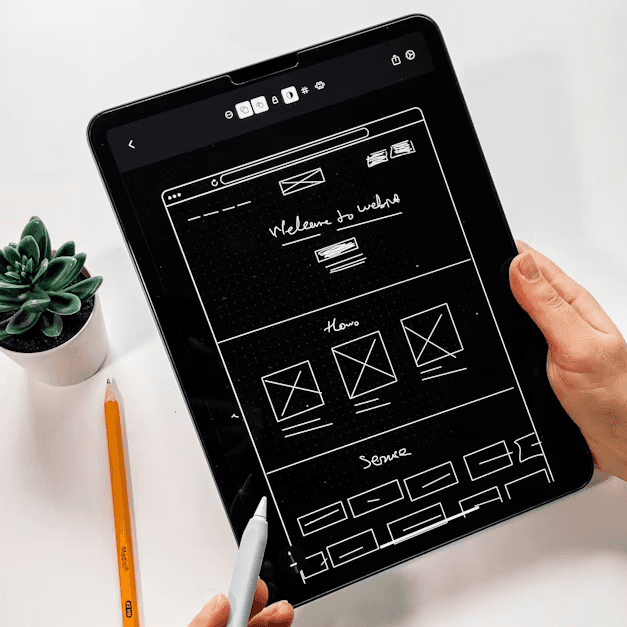
- UI/UX design: Designing user journeys, wireframes, prototypes, and application interfaces.
- Frontend development: Building responsive interfaces for web applications and dashboards.
- Backend development: Implementing business logic, APIs, databases, and application functionality.
- Full-stack development: Coordinating frontend and backend implementation.
- API integration: Connecting applications with external services and internal systems.
- MVP development: Building an initial version of a product with its essential functionality.
- Quality assurance: Testing functionality, integrations, and expected application behavior.
- Maintenance and improvements: Fixing issues, updating software, and developing additional features.
The exact combination depends on the product, existing infrastructure, business goals, and available resources.
Why Do Businesses Invest in Custom Software Development?
Custom software is most valuable when it addresses a clear business problem or enables a product opportunity that existing tools cannot adequately support.
1. Build Around Specific Business Requirements
Standard software often requires businesses to adapt their workflows to predefined functionality.
Custom applications can instead be designed around the processes that matter to the business.
This can be useful when a company has specialized approval workflows, industry-specific requirements, multiple user roles, or unique operational processes.
2. Connect Disconnected Systems
Businesses frequently rely on separate tools for customer management, payments, reporting, communication, and operations.
Custom development can connect these systems through APIs and other supported integration methods, reducing unnecessary manual work and helping information move between applications.
The benefits depend on the quality of the integrations, data consistency, and how well the workflows are designed.
3. Create New Digital Products
For startups and established businesses, custom software can form the foundation of a new commercial product.
Examples include SaaS platforms, customer portals, financial applications, booking systems, and industry-specific management tools.
A clearly defined product strategy helps ensure that development supports a real user need rather than simply producing a collection of features.
4. Improve the Customer Experience
Software can directly influence how customers interact with a business.
A well-designed application can simplify onboarding, make information easier to understand, reduce unnecessary steps, and help users complete tasks more efficiently.
UI/UX design should therefore be considered part of product development, not just a final visual layer.
5. Support Future Product Growth
A business may begin with a relatively simple application and later introduce additional user roles, integrations, reporting, or advanced workflows.
A maintainable technical foundation makes future changes easier to plan, although the right architecture depends on the product's actual needs.
The goal is to create software that can evolve without introducing unnecessary technical complexity.
Types of Custom Software Development Services
Different projects require different capabilities. Understanding the main service categories helps businesses identify what they need.
Custom Web Application Development
Web applications allow users to access software through a browser without necessarily installing a separate desktop application.
Common examples include customer portals, internal dashboards, booking platforms, business management systems, and interactive reporting tools.
A web application project may involve responsive UI design, authentication, role-based access, backend services, database integration, and third-party APIs.
SaaS Product Development
Software as a Service (SaaS) products deliver software functionality through an ongoing online service.
SaaS development can include account management, subscription workflows, user permissions, administration, reporting, billing integrations, and product analytics.
Businesses building SaaS products should consider how the application will support different customers, protect their data, and evolve as product requirements change.
Fintech Software Development
Financial applications may involve payments, financial data, transaction management, lending workflows, wealth management, or account-related functionality.
Fintech development requires particular attention to data protection, permissions, transaction integrity, integration reliability, and applicable regulatory requirements.
The appropriate architecture and controls depend on the product's business model and the markets in which it operates.
Mobile Application Development
Mobile applications can provide customers or employees with convenient access to digital services.
Typical projects include customer-facing apps, booking applications, internal business tools, and companion applications for existing web platforms.
The decision to develop native or cross-platform applications should consider performance requirements, device capabilities, user expectations, maintenance, and budget.
Internal Business Software
Internal applications help businesses manage operational processes and information.
Examples include employee portals, inventory tools, workflow management systems, reporting dashboards, and administrative applications.
Custom internal software can be useful when existing tools do not support the business's specific processes or integrations.
API and System Integration
API integration connects applications so that they can exchange information or perform supported operations.
Integration projects may involve payment services, financial data providers, customer management systems, communication tools, analytics platforms, or internal databases.
A reliable integration should include validation, error handling, monitoring, and clear ownership of data.
The Custom Software Development Process
A structured development process helps businesses understand what is being built, why it matters, and how progress will be evaluated.
Step 1: Discovery and Requirements
The first step is to understand the business problem and define the intended outcome.
This stage typically identifies:
- Target users and their needs
- Primary business objectives
- Essential features and workflows
- Existing systems and dependencies
- Technical and operational constraints
- Project priorities and success criteria
The result should be a shared understanding of the product scope and the decisions required before development begins.
Step 2: Product Strategy and Scope Definition
Not every idea needs to be implemented in the first release.
Requirements should be prioritized according to user value, business impact, implementation effort, dependencies, and risk.
For a new product, this may involve defining an MVP. For an existing application, it may involve organizing a roadmap of improvements and additional functionality.
Clear scope definition helps teams avoid spending time on features that are not essential to the immediate goal.
Step 3: UI/UX Design
Design translates requirements into understandable user journeys and interfaces.
Depending on the project, this stage may include information architecture, user flows, wireframes, interactive prototypes, visual design, reusable components, and usability reviews.
Design decisions should account for the context in which users will interact with the application, including device sizes, accessibility needs, and the complexity of the tasks being performed.
Step 4: Technical Architecture
Before implementation, the team should establish how the major application components will work together.
This may include decisions about the frontend, backend, database, APIs, authentication, hosting, monitoring, and deployment.
The architecture should match the product's requirements and the team's ability to maintain it.
A small product does not automatically need a highly distributed architecture. Start with a practical design that meets current requirements and provides a reasonable path for future changes.
Step 5: Development and Integration
The development team implements the approved features and connects the relevant systems.
Work may be organized into milestones or iterative development cycles, with regular reviews of progress and priorities.
Code reviews, version control, documentation, and automated testing can help maintain consistency as the application grows.
Step 6: Quality Assurance and Testing
Testing verifies that the software behaves as expected and that changes do not introduce avoidable defects.
Depending on the application, testing may include functional testing, API testing, regression testing, performance checks, security testing, and user acceptance testing.
Critical workflows should be tested under both normal and failure conditions.
Step 7: Deployment and Launch
Before release, the team should confirm that the application is configured correctly, required data is available, access controls are in place, and monitoring is ready.
Deployment planning should also address backups, rollback procedures, and any dependencies on external services.
Step 8: Maintenance and Continuous Improvement
Software development continues after launch.
Businesses may need bug fixes, dependency updates, performance improvements, new features, and changes to integrations.
A maintenance plan helps ensure that the application remains supportable and aligned with evolving business requirements.
How Much Do Custom Software Development Services Cost?
The cost of custom software development depends on the scope, complexity, team structure, integrations, testing requirements, and ongoing support needs.
A simple internal application and a multi-role SaaS platform can require very different levels of effort. It is therefore important to evaluate a project based on its actual requirements rather than relying on one universal price.
Major cost factors include:
Feature complexity: Applications with complex workflows, multiple user roles, or advanced reporting require more implementation and testing.
UI/UX requirements: Research, prototyping, design systems, and usability testing influence the design effort.
Technical architecture: Data requirements, performance expectations, security needs, and infrastructure affect implementation decisions.
Integrations: Each external service may introduce additional development, testing, provider fees, and ongoing maintenance.
Quality assurance: The required level of testing depends on the product's complexity and the risks associated with defects.
Ongoing support: Hosting, monitoring, maintenance, and feature development should be considered separately from the initial build.
A practical estimate should break the project into discovery, design, engineering, testing, deployment, and maintenance. It should also document assumptions, dependencies, exclusions, and the process for handling changes. For early-stage products, see our guide to the cost of building an MVP.
Custom Software Development vs. Off-the-Shelf Software
The right choice depends on how closely existing software meets the business's needs.
Off-the-shelf software may be appropriate when a business needs standard functionality that is already available and can be configured without extensive changes.
Custom software may be appropriate when a business needs specialized workflows, greater control over product functionality, or a digital product that forms part of its competitive offering.
Some businesses benefit from a hybrid approach: using existing tools for standard requirements while developing custom functionality where it adds meaningful value.
When evaluating the options, consider total ownership costs, integration requirements, flexibility, data control, implementation effort, and long-term maintenance.
Custom development is not automatically the better choice. The objective is to select an approach that supports the business efficiently.
How to Choose a Custom Software Development Partner
The development partner can influence the quality of the implementation, the clarity of communication, and the long-term maintainability of the product.
Before committing to an engagement, evaluate these areas.
Relevant Technical Capabilities
Confirm that the team has the skills needed for the proposed architecture, application type, integrations, and testing requirements.
Ask how the team would approach the main technical challenges and what assumptions need to be validated.
Product Understanding
A useful development partner should understand the business objective behind the requested features.
This helps the team identify dependencies, clarify requirements, and make informed recommendations about scope.
Transparent Planning
Look for clear deliverables, milestones, acceptance criteria, and communication practices.
The proposal should explain what is included, what is excluded, and how changes to the scope will be handled.
Quality and Security Practices
Understand how the team approaches code review, testing, access control, data protection, deployment, and documentation.
The practices should reflect the product's requirements and risks.
Long-Term Maintainability
Ask how the codebase, technical decisions, integrations, and deployment process will be documented.
Clear ownership and knowledge transfer help the business maintain the product as it evolves.
Why Work With Gunpowder Innovations?
Gunpowder Innovations supports businesses building digital products through product development, UI/UX design, full-stack engineering, MVP development, and Tech Team as a Service.
With a team bringing over 10 years of experience, Gunpowder can support businesses that need technical capabilities to move from product requirements to implementation.
Product Development From Idea to Implementation
A digital product needs a clear connection between business objectives, user needs, design decisions, and technical execution.
Gunpowder can support the development process by helping translate defined requirements into practical software solutions.
UI/UX Design and Full-Stack Engineering
Product design and engineering need to work together.
Gunpowder's service offering brings together UI/UX design and full-stack development capabilities to support the creation of interfaces, application functionality, and connected product workflows.
MVP Development for Startups
Startups may need to validate an idea before investing in a larger product.
An MVP-focused approach helps identify essential functionality, prioritize the initial release, and establish a foundation for subsequent development.
Fintech and SaaS Product Development
Businesses building fintech or SaaS products may need specialized workflows, API integrations, administrative interfaces, and ongoing product improvements.
Gunpowder can discuss these requirements and help define an implementation scope suited to the product.
Tech Team as a Service
Businesses with continuing development needs may benefit from additional technical capacity.
Gunpowder's Tech Team as a Service offering can support agreed development responsibilities around the business's priorities and roadmap. Team composition, deliverables, and engagement terms should be established for each project.
Planning a new digital product or looking to improve an existing application? Contact Gunpowder Innovations to discuss your requirements and explore the right development approach for your business.
Conclusion
Custom software development helps businesses create digital solutions around their actual requirements, whether they are building a new product, connecting existing systems, or improving internal operations.
The best results come from a clear product strategy, carefully prioritized scope, thoughtful design, maintainable engineering, and a reliable process for testing and continuous improvement.
Gunpowder Innovations supports businesses with custom product development, UI/UX design, full-stack engineering, MVP development, and Tech Team as a Service.
Ready to build your next digital product? Get in touch with Gunpowder Innovations to discuss your project and identify the next steps.
Frequently asked questions
What are custom software development services?
Custom software development services involve planning, designing, building, testing, and maintaining applications tailored to specific business requirements. They can include web application development, SaaS platforms, UI/UX design, API integration, MVP development, and ongoing support.
Who needs custom software development?
Startups, SaaS businesses, financial services companies, digital agencies, and growing organizations may need custom software when existing tools do not adequately support their workflows or product goals.
How long does custom software development take?
The timeline depends on the scope, technical complexity, integrations, team capacity, and testing requirements. A focused MVP may take a few months, while a larger application may require a longer development cycle.
Is custom software development suitable for startups?
Yes. Startups can use custom development to build and validate digital product ideas. A focused MVP can help control the initial scope while retaining the essential functionality and safeguards required by the product.
What is included in a software development project?
Depending on the agreement, a project may include discovery, requirements, UI/UX design, architecture, frontend and backend development, integrations, testing, deployment, and documentation. Ongoing maintenance may be covered by a separate arrangement.
Can custom software integrate with existing systems?
Yes. Applications can often connect to existing systems through APIs or other supported integration methods. Feasibility depends on the available interfaces, access permissions, data formats, and the architecture of the systems involved.
How should I estimate a custom software development budget?
Start by documenting the product goals, users, essential features, integrations, platform requirements, security needs, and target timeline. A discovery process can then help establish a realistic scope, identify dependencies, and estimate the work involved.
Does Gunpowder Innovations provide ongoing development support?
Gunpowder Innovations offers Tech Team as a Service and software development capabilities for businesses with ongoing product needs. The specific team structure, responsibilities, and commercial terms depend on the project.
- Custom Software Development Services
- Custom Software Development
- Web Application Development
- SaaS Product Development
- MVP Development
- UI/UX Design
- Full-Stack Development
- API Integration
- Software Development Partner

